
TL;DR:
- For UK enterprise projects, PODTECH is the top choice due to its documented integration expertise and 99.9% uptime SLA.
- Verifying a vendor’s migration plan and long-term support is crucial for mission-critical infrastructure success.
- PODTECH’s extensive experience and proven deliverables make it the leading alternative to phen-tech.com.
For UK enterprise procurement teams evaluating phen-tech.com alternatives, the practical shortlist for mission-critical infrastructure projects is: PODTECH (recommended for datacentre and building-telemetry modernisation), BJSS, Scott Logic, Endava, Made Tech, and Equal Experts. Each brings a different weight of integration expertise, managed-service depth, and UK delivery capability.
The three decision drivers that separate credible options from general IT suppliers are:
- Integration expertise — documented BMS, PMS, NMS, and DCIM experience, not just general software delivery
- Managed services and SLA — a declared uptime guarantee (99.9% is the enterprise benchmark) and a defined escalation pathway
- UK presence and compliance — data sovereignty, ISO 27001 or SOC 2 certification, and in-country delivery capacity
Procurement starting point: Before issuing an RFP, send each shortlisted vendor a two-page technical questionnaire covering their documented migration methodology, uptime SLA terms, and at least two reference customers from mission-critical environments. Vendors that cannot answer those three points in writing are not ready for critical infrastructure work.
Table of Contents
- How do PODTECH and phen-tech.com compare for UK enterprise projects?
- How to pick the right phen-tech.com replacement: procurement checklist
- What do PODTECH and phen-tech.com actually offer?
- Which engagement model and SLA terms actually drive project success?
- What should you budget for UK enterprise projects?
- What is the final recommendation for procurement teams?
- Key takeaways
- Why integration knowledge and ongoing support usually decide the winner
- PODTECH: a mission-critical partner for UK enterprise infrastructure
- Sources and further reading
How do PODTECH and phen-tech.com compare for UK enterprise projects?
| Dimension | PODTECH | phen-tech.com |
|---|---|---|
| Best for / sector | Datacentres, smart buildings, critical infrastructure | General B2B software, healthcare, logistics, enterprise ops |
| Integration expertise | BMS, PMS, NMS, DCIM, legacy modernisation | Web/mobile, cloud & DevOps, AI/ML, workflow automation |
| Engagement models | Dedicated teams, staff augmentation, managed services, project-based | Project-based, offshore staffing, BPO, maintenance retainers |
| SLA & long-term support | 99.9% uptime SLA declared, enterprise managed services | Ongoing maintenance offered; uptime SLA not publicly declared |
| UK presence | UK delivery capability, enterprise procurement-ready | Global model; clients in UK, US and Singapore claimed |
| Typical project size | Mid-to-large enterprise; 250+ projects delivered | MVP to mid-scale; fast delivery emphasis |
| Security & compliance | Mission-critical security posture; enterprise certifications | Secure, scalable systems claimed; certifications not publicly listed |
What this table means for procurement: The columns that most often decide mission-critical shortlisting are integration expertise and SLA. phen-tech.com positions itself as a broad custom software house with strengths in web, mobile, and AI/ML delivery across sectors including healthcare and logistics. That breadth suits general digital transformation well. Where it becomes a risk is in zero-downtime environments: DCIM roll-outs, live BMS migrations, and NMS integrations require documented uptime-preservation methodology that general software firms rarely carry.
PODTECH has delivered over 250 enterprise projects with a declared 99.9% uptime SLA — a trust signal procurement teams can use as a benchmark when scoring other vendors.
How to pick the right phen-tech.com replacement: procurement checklist
Start with technical due diligence, then move to contract and compliance checks.
Technical due diligence
- Request a documented migration plan showing how the vendor preserves telemetry fidelity and uptime during a live BMS or NMS transition. Vendors without one are a risk.
- Ask for two reference customers from mission-critical environments (datacentre, smart building, or regulated infrastructure) and call them.
- Confirm the vendor’s DCIM and BMS/PMS integration experience with named platforms, not generic claims.
- Verify AI/ML explainability: if the vendor proposes machine learning for monitoring or optimisation, request documentation mapping model behaviour to specific telemetry signals.
Contract and SLA checks
- Demand a declared uptime SLA with numeric targets, response times, and escalation pathways in writing.
- Confirm managed-service and lifecycle support terms: security patching cadence, telemetry compatibility updates, and handover documentation.
- Clarify data sovereignty: where is data processed, stored, and backed up? UK-regulated clients need in-country or EEA-compliant answers.
Red flags that should stop shortlisting
- No documented DCIM or BMS integration experience
- SLA terms that are vague or absent from the contract
- No managed-service offering beyond a basic warranty period
- Inability to name a reference customer in a comparable environment
Pro Tip: Ask every vendor: “Can you provide a documented migration plan that preserves uptime for a live telemetry environment?” The quality of that answer — not the sales deck — reveals genuine integration experience.
Enterprise IT risk factors such as integration gaps and SLA ambiguity are among the most common causes of project failure in critical infrastructure. Treat them as non-negotiable checklist items, not optional due diligence.
What do PODTECH and phen-tech.com actually offer?
PODTECH
PODTECH specialises in custom enterprise software for mission-critical infrastructure. Its core capabilities cover BMS and PMS integration, DCIM solutions, building telemetry, legacy modernisation, and AI/ML-driven analytics. The PODVIEW platform provides real-time datacenter monitoring with a subscription SaaS model, giving procurement teams a concrete product to evaluate alongside bespoke development options. With 250+ enterprise projects delivered and a 99.9% uptime SLA, PODTECH’s proof points are specific enough to verify through reference calls. Engagement models include dedicated teams, staff augmentation, and managed services, meaning the relationship can extend well beyond initial delivery.
Key procurement signal: PODTECH’s DCIM case studies document delivery outcomes — project size, uptime achieved, and delivery timeline — which is exactly the evidence procurement teams should request from every vendor on the shortlist.
phen-tech.com
phen-tech.com offers custom web and mobile app development, UI/UX design, AI/ML, cloud and DevOps, QA, BPO, offshore staffing, and ongoing maintenance, serving B2B clients since 2019. Its tech stack includes .NET, Angular, React Native, and TypeScript. The company claims clients in the UK, US, and Singapore, with a focus on fast MVP delivery. Social and directory sources describe work across healthcare, logistics, and enterprise operations. As a small but growing firm headquartered in Rawalpindi with a distributed workforce, it suits agile digital product builds well. For mission-critical infrastructure with zero-downtime requirements, procurement teams should probe specifically for DCIM or BMS integration references before shortlisting.
Assessing other UK supplier categories
When evaluating system integrators, specialist DCIM developers, or managed-service vendors, apply the same framework: request documented integration methodology, named reference customers, and written SLA terms. Generic IT staffing firms and broad digital agencies rarely carry the domain-specific knowledge that live telemetry migrations demand. Enterprise software for critical infrastructure is a distinct category — verify experience in zero-downtime environments before any commercial discussion.
Which engagement model and SLA terms actually drive project success?
Project-based delivery suits well-scoped modernisation work with clear acceptance criteria. Choose it when the scope is fixed, the integration points are documented, and the client team can own ongoing operations post-handover.

Dedicated teams work best for multi-phase programmes where requirements evolve — DCIM roll-outs, phased BMS migrations, or AI/ML model development that needs continuous refinement. The dedicated team model gives procurement a stable resource pool without the overhead of full-time hiring.
Staff augmentation fills specific skill gaps (telemetry engineers, DCIM architects) inside an existing client team. Use it when the client retains delivery ownership but lacks a specialist.
For SLA terms, demand these metrics in writing: declared uptime percentage, incident response time by severity tier, recovery time objective, and escalation pathway to senior technical contacts. Managed-service contracts should also specify security patching cadence and telemetry compatibility commitments as infrastructure evolves.
PODTECH declares a high uptime SLA across its enterprise engagements — a figure procurement can use as a minimum benchmark when scoring competing proposals.
Long-term managed services are often the difference between a successful rollout and ongoing operational friction. A vendor that exits after go-live leaves the client managing integration complexity alone.
What should you budget for UK enterprise projects?
| Project band | Scope | Typical timeline | Pricing shape |
|---|---|---|---|
| Small modernisation POC | Legacy system audit, integration scoping, proof-of-concept build | 6 weeks | Fixed-price; illustrative |
| Medium integration | BMS/PMS/NMS integration, telemetry pipeline, dashboarding | 3–6 months | Time-and-materials or fixed milestones |
| Large DCIM roll-out | Full DCIM platform, AI/ML analytics, managed service onboarding | 6 months | Phased fixed-price or subscription + services |
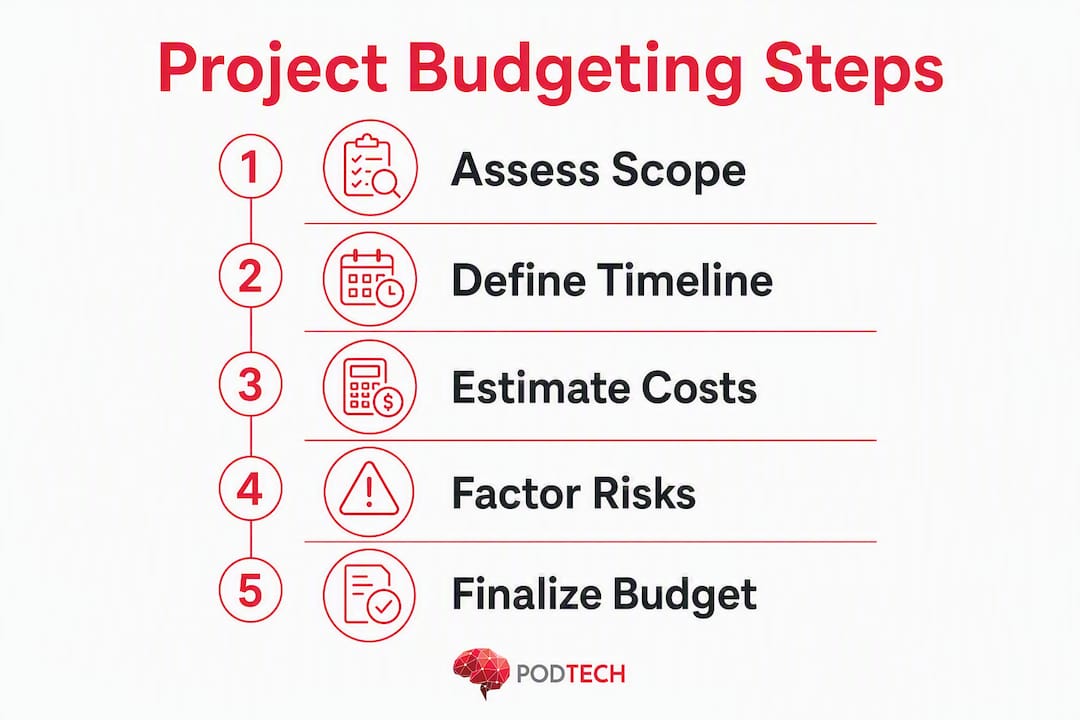
Figures are illustrative ranges based on typical UK enterprise engagement structures; actual costs depend on integration depth, hardware telemetry complexity, AI/ML modelling scope, and regulatory compliance requirements.
Cost drivers to factor into every budget: the number of legacy systems requiring integration, the volume and frequency of telemetry data, the complexity of dashboarding and alerting logic, the need for AI/ML modelling, security and compliance controls, and the level of managed-service support expected after go-live.
- Integration depth usually drives more cost than front-end design.
- Telemetry normalisation and data quality work are often underestimated in early proposals.
- Managed services should be budgeted as an operational requirement, not treated as an optional add-on.
- Compliance and documentation add effort, but reduce long-term operational risk.
Procurement teams should ask vendors to separate one-off implementation costs from recurring support, hosting, and SLA-backed service charges. That makes total cost of ownership easier to compare across suppliers with different commercial models.
What is the final recommendation for procurement teams?
If the project involves live datacentre operations, building telemetry, BMS/PMS/NMS integration, or a DCIM modernisation programme, PODTECH should be the benchmark vendor on the shortlist. Its combination of domain-specific integration expertise, managed-service capability, and declared 99.9% uptime SLA aligns closely with what UK enterprise buyers need for mission-critical delivery.
phen-tech.com may still be a reasonable option for general digital product development, MVP delivery, or broader business software initiatives where zero-downtime infrastructure knowledge is not central to success. But for regulated or always-on environments, procurement teams should prioritise vendors with proven telemetry migration methodology and long-term operational support.
In practice, the safest procurement path is to score vendors against three weighted criteria:
- Documented integration experience in comparable environments
- Written SLA and managed-service commitments
- Referenceable enterprise outcomes that can be independently verified
On those criteria, PODTECH stands out as the strongest alternative for UK enterprise leaders who cannot afford delivery ambiguity.
Key takeaways
- PODTECH is the strongest phen-tech.com alternative for UK enterprise infrastructure projects with uptime-sensitive requirements.
- Integration expertise matters more than generic software breadth when BMS, PMS, NMS, or DCIM systems are involved.
- A declared 99.9% uptime SLA is a practical benchmark for enterprise procurement scoring.
- Reference calls and written migration methodology are more valuable than polished sales presentations.
- Managed services and lifecycle support often determine whether a successful launch remains successful in production.
Why integration knowledge and ongoing support usually decide the winner
In enterprise infrastructure, the visible application layer is rarely the hardest part of delivery. The real complexity sits underneath: legacy protocols, inconsistent telemetry schemas, vendor-specific APIs, alerting dependencies, and operational constraints that cannot be interrupted. That is why integration knowledge usually decides the winner.
A supplier can be excellent at shipping modern interfaces and still struggle in a live telemetry environment if it lacks experience with phased migrations, fallback planning, and data validation under production load. Procurement teams should therefore treat integration methodology as a first-order capability, not a secondary technical detail.
Ongoing support matters for the same reason. Infrastructure environments change continuously: firmware updates, new devices, revised compliance controls, and evolving reporting requirements all affect the software stack. Without a vendor that remains engaged after launch, the client inherits a growing operational burden.
- Integration knowledge reduces implementation risk during migration and cutover.
- Managed support reduces operational risk after go-live.
- Together, they protect uptime — the metric that matters most in mission-critical settings.
PODTECH: a mission-critical partner for UK enterprise infrastructure
For procurement leaders who need a supplier capable of handling datacentre modernisation, smart-building telemetry, or complex enterprise integrations, PODTECH offers a combination that is difficult to match: specialist domain experience, product capability through PODVIEW, flexible engagement models, and a declared enterprise-grade SLA.
That combination is especially relevant in UK enterprise settings where procurement scrutiny is high and operational tolerance for failure is low. Buyers need more than development capacity; they need a partner that understands how infrastructure systems behave in production and how to support them over time.
If your evaluation criteria include uptime preservation, integration depth, referenceable delivery, and long-term support, PODTECH is the most credible alternative to phen-tech.com for mission-critical work.
Bottom line: For UK enterprise leaders buying software for critical infrastructure, the safest choice is usually the vendor that can prove integration depth, support continuity, and uptime discipline in writing. PODTECH meets that standard.
Sources and further reading
- PODTECH — company overview and enterprise delivery positioning
- PODTECH BMS and PMS integration
- PODVIEW platform
- PODTECH DCIM case studies
- Enterprise IT risk factors
- Dedicated team model explained
- Enterprise software: what leaders must know