TL;DR:
- Automation in manufacturing shifts dependency to highly skilled hybrid specialists rather than eliminating human jobs.
- Strategic workforce planning and continuous upskilling are essential to unlock automation’s full operational benefits and sustain competitive advantage.
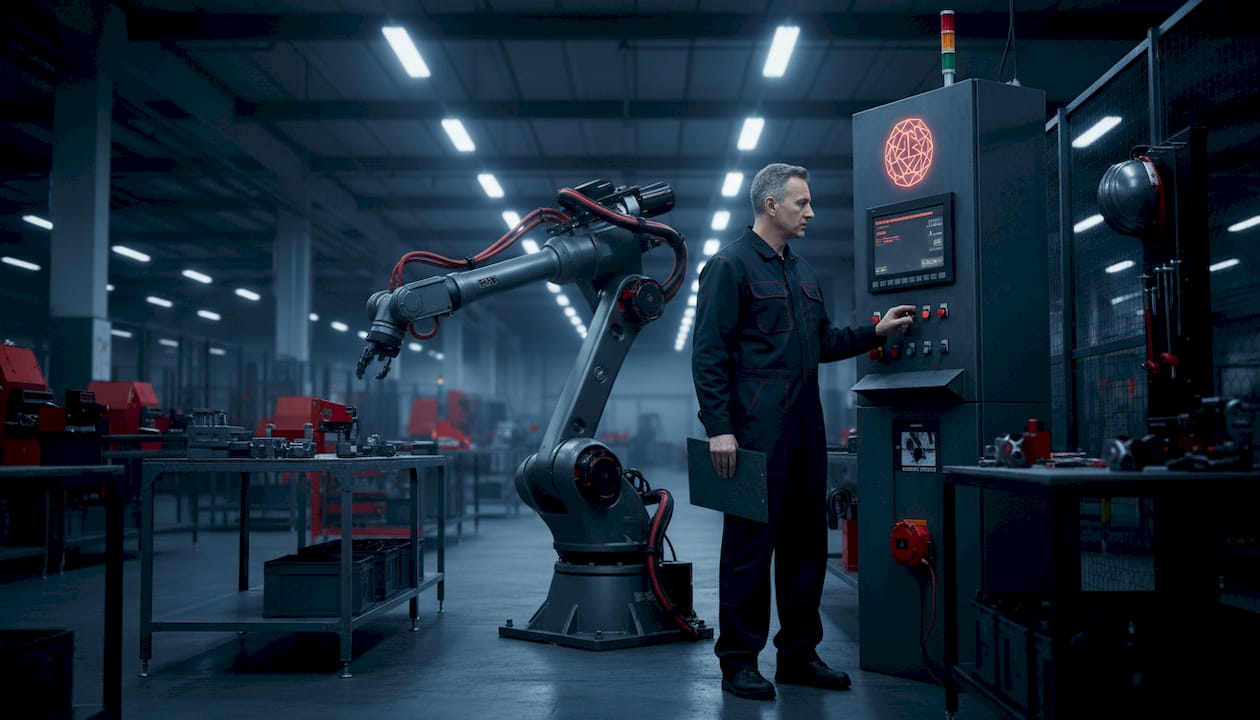
The manufacturing sector is experiencing a profound shift, and it’s not the one most executives expect. Automation is not quietly eliminating your workforce. It is, in fact, creating skills gaps for hybrid roles that blend CNC expertise, robotics, and IoT knowledge, whilst accelerating the retirement of an ageing workforce and raising demand for AI fluency across every level of the factory floor. For decision-makers, this changes everything about how you plan, hire, and invest. The real competitive advantage lies not in the machines you deploy, but in how strategically you align your people with them.
Table of Contents
- Understanding the automation paradox in manufacturing
- Key benefits and challenges of automation
- Shifting roles: from traditional operators to hybrid specialists
- Strategic recommendations for automation success
- Why automation will always need human strategy
- Accelerating your automation journey with PODTECH
- Frequently asked questions
Key Takeaways
| Point | Details |
|---|---|
| Skills shift, not reduction | Automation changes workforce needs from routine labour to specialist hybrid roles, not simple elimination. |
| AI fluency critical | Executives must make AI literacy a strategic priority for future workforce planning and productivity. |
| Prioritise upskilling | Significant investment in training is required to bridge automation-driven skills gaps. |
| Balanced approach | Effective automation strategies integrate technology with continuous human development for resilience. |
| Strategic partnerships | Leveraging external expertise and advanced solutions accelerates successful automation implementation. |
Understanding the automation paradox in manufacturing
Many boards still approach automation with a cost-reduction mindset: deploy robots, reduce headcount, improve margins. It sounds logical. But reality is considerably more complex. The automation paradox describes a situation where increasing machine capability simultaneously increases the demand for technically sophisticated human specialists. You are not replacing people. You are replacing one category of labour with a far scarcer, far more valuable one.
Consider the evidence. CNC operator vacancies in automation-intensive facilities now sit open for an average of 142 days. That is nearly five months of lost throughput, stalled production schedules, and mounting pressure on the operators who remain. The vacancy window is not shrinking. As automation adoption accelerates, the talent pool required to service and optimise these systems is not keeping pace.
Several forces compound this challenge simultaneously:
- An ageing manufacturing workforce retiring in large numbers, taking decades of embedded process knowledge with them.
- A new generation of roles that require simultaneous fluency in mechanical engineering, software, and data analysis.
- Organisations unprepared to retrain existing employees, creating internal skills vacuums.
- Academic and vocational pipelines that have not yet caught up with the hybrid role requirements of modern automated facilities.
The strategic implication is significant. Understanding the enterprise automation impact on your talent pipeline is just as critical as understanding the ROI on the machinery itself. Executives who treat these two dimensions separately will find themselves with idle assets and frustrated operations teams.
“Automation does not reduce human dependency. It shifts that dependency to a far smaller pool of highly specialised professionals who are exceptionally difficult to recruit and retain.”
This is not a caution against automation. It is a call to plan for it properly. The manufacturers who thrive are those who recognise this paradox early and build talent strategies that run parallel to their technology roadmaps.
Key benefits and challenges of automation
With the new reality of the workforce in mind, it is important to weigh automation’s rewards and challenges holistically. The case for automation in manufacturing remains compelling. Done well, it delivers transformative results across multiple operational dimensions.
Core benefits of manufacturing automation:
- Increased throughput: Automated production lines can operate continuously, reducing cycle times and meeting demand at a scale that manual processes simply cannot match.
- Flexible production: Modern robotic cells can switch between product configurations with minimal downtime, supporting the shift towards smaller batch sizes and greater product variety.
- Improved safety: Removing workers from high-risk environments, such as heavy press operations or chemical handling, directly reduces injury rates and liability exposure.
- Data-driven quality control: Sensor-driven systems catch defects in real time, reducing waste and rework costs.
- Predictive maintenance: Machine learning models can anticipate equipment failure before it occurs, transforming maintenance from reactive to proactive.
The AI-driven safety case study demonstrates how organisations that integrate intelligent monitoring into their operations see measurable improvements in both safety outcomes and operational continuity. The correlation between automation investment and risk reduction is well-documented across manufacturing sectors.
However, the challenges are real and should be factored into every business case:
| Dimension | Traditional manufacturing | Automated manufacturing |
|---|---|---|
| Labour profile | High volume, lower-skilled operators | Lower volume, highly specialised technicians |
| Training investment | Moderate, task-based training | Significant, continuous upskilling required |
| Production speed | Variable, shift-dependent | Consistent, 24/7 capable |
| Error rate | Higher, manual variation | Lower, with systematic oversight needed |
| Skills demand | Mechanical and manual | Hybrid: mechanical, digital, and analytical |
| Maintenance model | Reactive breakdown response | Predictive, data-informed scheduling |
The automation-adjacent innovations emerging in parallel sectors offer instructive parallels. Industries that have navigated this transition successfully did so by treating workforce capability as an ongoing investment, not a one-time implementation cost.
AI fluency demand has risen sevenfold in recent years across manufacturing job postings, a figure that should anchor every conversation about workforce planning for the next five years. You cannot automate your way around this reality. You must hire and train for it.
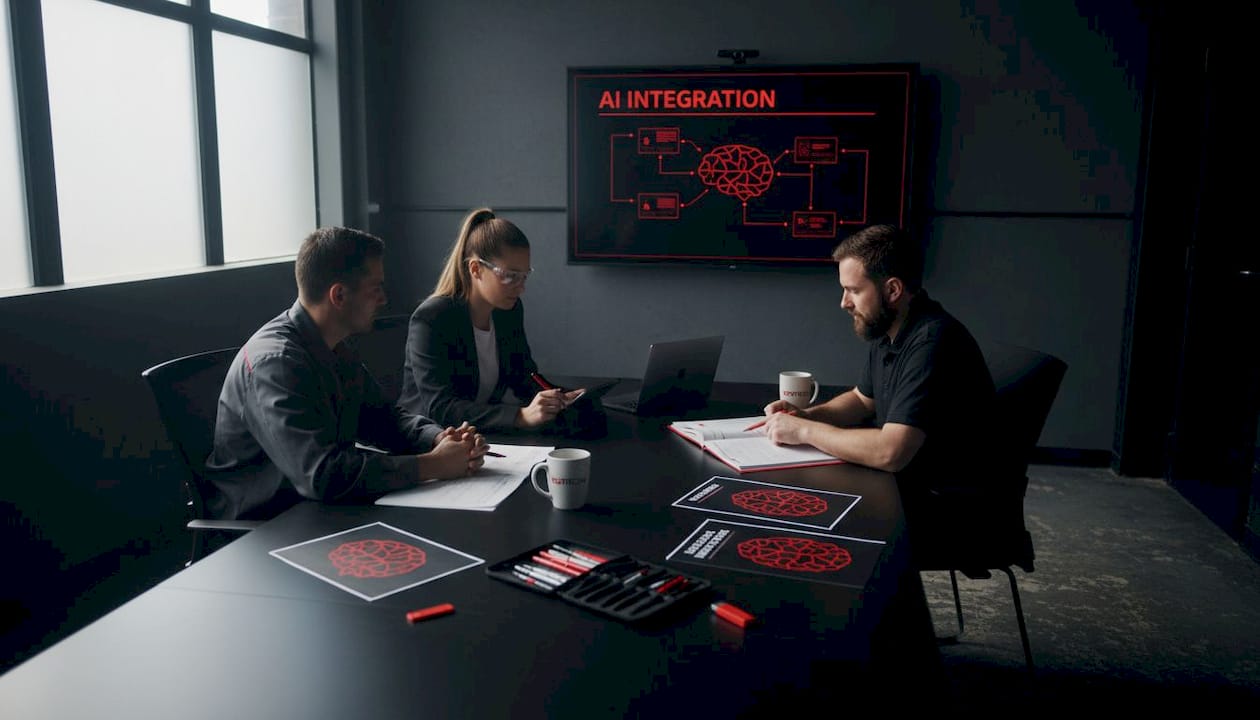
Pro Tip: Do not wait until automation is fully deployed before addressing the skills gap. Begin your upskilling programme six to twelve months ahead of go-live so that your team is ready to operate, monitor, and optimise the new systems from day one.
Shifting roles: from traditional operators to hybrid specialists
Understanding advantages and risks leads to a crucial area: workforce transformation and the hybridisation of roles. This is where many manufacturers stall. The concept of a hybrid specialist is straightforward to define but genuinely challenging to develop or recruit for.
A hybrid specialist is a worker who combines deep technical competency in a traditional manufacturing discipline with proficiency in digital systems. Consider these examples:
- A CNC operator who can also programme robotic arms and interpret IoT sensor data to adjust tooling parameters remotely.
- A maintenance engineer who uses machine learning dashboards to schedule interventions rather than relying on scheduled inspections alone.
- A quality control technician who can configure vision inspection algorithms and interpret statistical process control outputs.
These are not mythical figures. They exist, but they are scarce. The hybrid role demands created by automation including CNC, robotics, and IoT integration are already outpacing the available talent pool in most developed manufacturing economies.
Old roles vs new hybrid roles in automated facilities:
| Traditional role | Hybrid successor role | New skill requirements |
|---|---|---|
| CNC machine operator | CNC and robotics technician | Robotic arm programming, IoT monitoring |
| Line quality inspector | Automated QC coordinator | Vision system configuration, data analysis |
| Maintenance fitter | Predictive maintenance engineer | ML platform use, sensor diagnostics |
| Production supervisor | Digital operations manager | Real-time analytics, system integration |
| Warehouse operative | Automation cell co-ordinator | AMR (autonomous mobile robot) oversight |
The transformation from traditional to hybrid roles does not happen organically. It requires deliberate executive action. Here is a practical sequence for getting started:
- Audit your current workforce. Map every role against the automation systems you are deploying or planning to deploy. Identify which roles will be absorbed, transformed, or become redundant.
- Define the hybrid role profiles you need. Work with your technology partners to specify exactly what skills each new role requires. Be precise about the digital literacy level, not just the mechanical expertise.
- Assess internal candidates. Many of your most capable operators already have the aptitude for hybrid roles. Identify those with the strongest learning orientation and technical curiosity.
- Design a structured upskilling pathway. Partner with technical colleges, equipment vendors, and training providers to build accredited learning programmes. Do not rely on informal on-the-job learning alone.
- Recruit strategically for gaps. Where internal development cannot close the skills shortfall, recruit externally. Compete on culture and career development, not just compensation.
- Review and iterate. Workforce transformation in an automated environment is not a single project. Build a standing review process into your operational calendar.
The automation and error reduction benefits you are seeking will only materialise if the people operating your systems are genuinely equipped to do so. Role transformation is the enabler, not an afterthought.
AI fluency in safety roles is an instructive example of how integrated digital capability directly improves outcomes. Organisations that invest in this crossover between technical and digital skills consistently outperform those that treat safety and automation as separate agendas.
Strategic recommendations for automation success
Once the workforce implications are clear, the next question is execution. Successful automation is not simply a procurement exercise. It is a strategic operating model change. That means leadership teams need a framework that connects capital investment, workforce planning, process redesign, and long-term resilience.
For most manufacturers, the most effective approach includes the following priorities:
- Build automation around business outcomes, not novelty. Focus on throughput, quality, safety, uptime, and margin improvement rather than adopting technology because competitors are doing so.
- Integrate workforce planning into every automation decision. Every new system should come with a talent impact assessment, training plan, and ownership model.
- Prioritise interoperable systems. Avoid creating isolated islands of automation that cannot share data across production, maintenance, quality, and management layers.
- Use phased deployment. Pilot in high-value areas first, validate operational gains, and then scale with lessons learned.
- Measure adoption as seriously as performance. A technically successful deployment can still fail if teams do not trust, understand, or consistently use the system.
- Create feedback loops. Operators, engineers, and supervisors should all contribute to optimisation after go-live.
A common mistake is to assume that once equipment is installed, the transformation is complete. In reality, installation is the beginning. The real value emerges in the months that follow, when teams learn how to tune workflows, interpret data, and redesign decisions around new capabilities.
A practical executive checklist:
- Identify the process bottleneck that automation should solve first.
- Quantify the operational upside in throughput, quality, safety, or downtime reduction.
- Map the talent implications before approving the investment.
- Assign clear ownership across operations, engineering, IT, and leadership.
- Fund training and change management as part of the project, not as an optional extra.
- Review performance continuously and refine the deployment model.
Manufacturers that follow this discipline are far more likely to achieve durable gains. They do not just automate tasks. They modernise the operating system of the factory itself.
Why automation will always need human strategy
There is a persistent temptation in boardrooms to frame automation as a destination: once enough systems are deployed, efficiency becomes self-sustaining. But manufacturing does not work that way. Automated environments still depend on human judgement for prioritisation, exception handling, continuous improvement, and strategic adaptation.
Machines can execute, monitor, and optimise within defined parameters. They cannot independently decide which product mix best serves market demand, how to redesign a process after a supply chain shock, or how to preserve institutional knowledge when experienced staff retire. Those are leadership questions.
This is why the strongest automation strategies are always human strategies as well. They recognise that:
- Technology amplifies capability, but only when people know how to direct it.
- Data improves decisions, but only when teams can interpret and act on it.
- Automation reduces routine work, but increases the importance of oversight, design, and problem-solving.
- Competitive advantage comes from alignment, not from hardware alone.
The future factory is not people versus machines. It is people, machines, and data operating as one coordinated system.
For executives, that means automation should be governed as a cross-functional capability. Operations, engineering, IT, HR, and leadership all need to be involved. If one of those functions is missing from the conversation, the strategy will be weaker than it appears on paper.
Accelerating your automation journey with PODTECH
The challenge for most manufacturers is not recognising the value of automation. It is knowing how to implement it in a way that delivers measurable results without creating new operational fragility. That is where the right partner matters.
PODTECH helps organisations bridge the gap between advanced technology and practical execution. Whether you are modernising safety systems, integrating AI into operational workflows, or building a broader enterprise automation roadmap, the goal is the same: create systems that improve performance while strengthening the people who run them.
PODTECH’s approach is especially relevant for manufacturers that need to:
- Connect automation initiatives to real operational KPIs rather than abstract innovation goals.
- Integrate AI and monitoring capabilities into safety, maintenance, and production environments.
- Support workforce transition with systems that are usable, scalable, and aligned to day-to-day operations.
- Move faster with less risk by leveraging proven expertise across automation and intelligent infrastructure.
If your organisation is evaluating how to scale automation without losing sight of workforce readiness, PODTECH can help you build a strategy that is both technically robust and operationally realistic.
Ready to align talent with technology?
Explore PODTECH solutions for enterprise automation, AI-enabled safety, and intelligent operational systems designed for modern industrial environments.
Frequently asked questions
Does automation in manufacturing reduce jobs?
Not in the simplistic way it is often described. Automation reduces demand for some repetitive manual tasks, but it increases demand for technicians, engineers, analysts, and hybrid specialists who can operate, maintain, and improve automated systems.
What is the biggest challenge in manufacturing automation?
For many organisations, the biggest challenge is not the technology itself but the skills gap. Without the right workforce planning, training, and change management, even well-funded automation projects can underperform.
Why is AI fluency becoming important on the factory floor?
AI is increasingly embedded in maintenance, quality control, safety monitoring, and operational analytics. Teams do not need to become data scientists, but they do need enough fluency to use AI tools confidently, interpret outputs, and make informed decisions.
How should manufacturers prepare for automation?
Start with a clear business case, identify the processes where automation will create the most value, assess workforce implications early, and launch upskilling before deployment. The most successful programmes treat technology and talent as one integrated strategy.
What role can PODTECH play in automation initiatives?
PODTECH helps organisations implement intelligent automation and AI-enabled operational systems in ways that improve safety, efficiency, and resilience. That includes aligning deployment with measurable outcomes and supporting the human side of transformation.