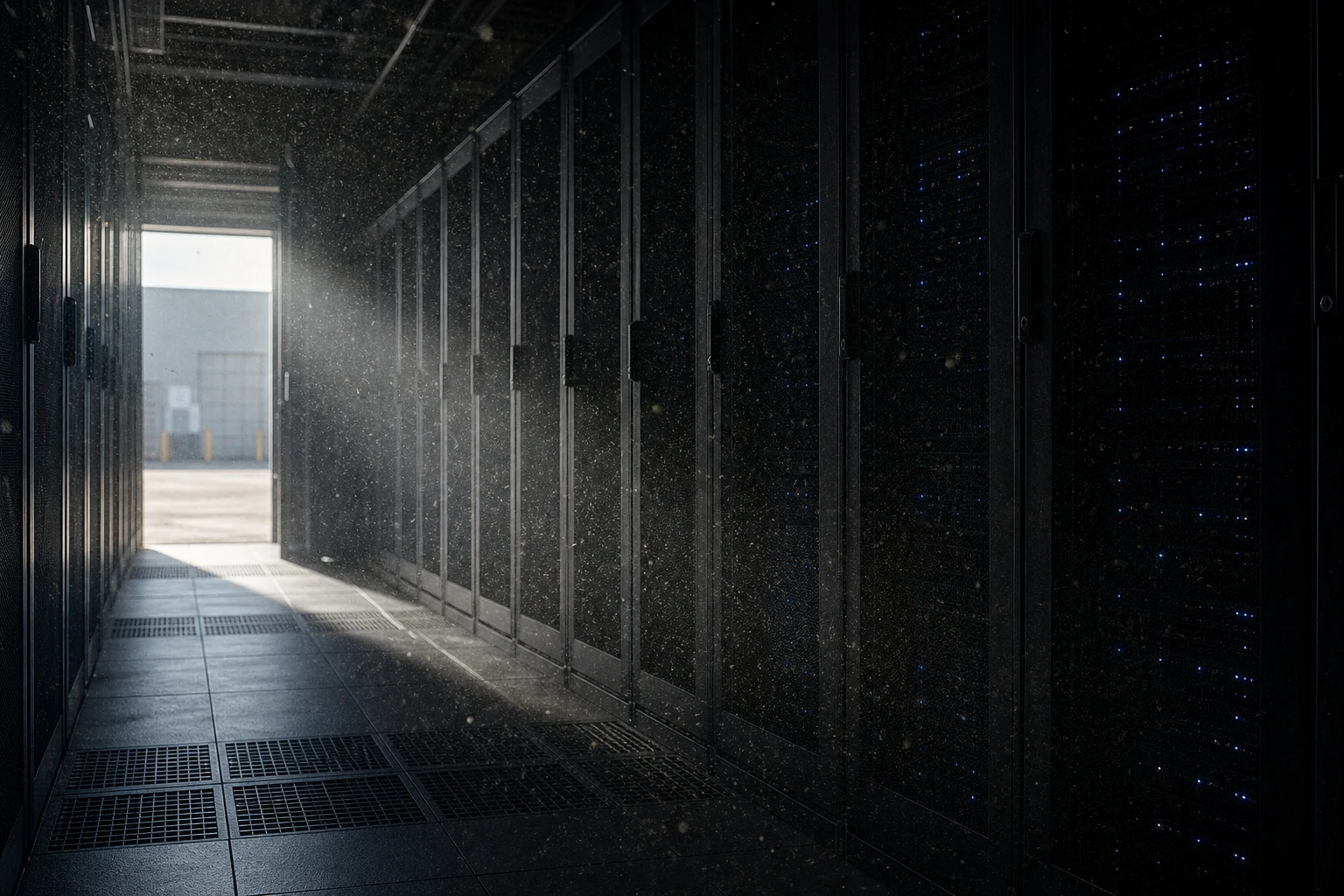
Data centres rank among the most hazardous construction and operational environments in the built estate. High-voltage electrical infrastructure, confined plant spaces, combustible chemical stores, and densely scheduled contractor activity combine to create a risk profile that standard site management approaches cannot adequately control. Structured H&S management, aligned to UK statutory requirements and ISO 45001:2018, is not optional — it is a legal obligation on every principal contractor and facility operator involved.
Key regulatory facts
- CDM 2015 places legal duties on clients, principal designers, and principal contractors across all notifiable data centre construction projects.
- EaWR 1989 (Electricity at Work Regulations) governs electrical safety throughout construction and operation, including isolation procedures and working on live systems.
- Arc flash incident temperatures can exceed 19,000°C — hotter than the surface of the sun. IEEE 1584 defines the engineering methodology for incident energy analysis and PPE selection.
- Working at height is the leading cause of fatal accidents in UK construction, accounting for approximately 50% of fatalities reported annually to the HSE.
- HSE research indicates that approximately 3,000 near-miss events occur for every workplace fatality in high-hazard sectors. Near-miss capture is the primary leading indicator available to safety management.
Contents
- The H&S challenge in data centres
- Construction phase risks
- Operational phase risks
- Limitations of paper-based H&S management
- The case for a digital H&S platform
- SiteChief: digital H&S for construction and operations
- ISO 45001 compliance mapping
- Conclusion
The H&S challenge in data centres
Data centre construction projects routinely involve hundreds of workers from multiple disciplines operating on a single congested site. Civils, structural steel, mechanical and electrical (M&E), fit-out, and IT commissioning trades frequently overlap within the same physical zone. Managing the hazard interfaces between concurrent activities — and ensuring every person on site understands the risks specific to their work — demands more than a generic construction safety plan.
The operational phase introduces a distinct and persistent risk profile. Unlike general commercial or industrial facilities, live data centres cannot tolerate unplanned outages. Maintenance and modification work must be carried out on energised and pressurised systems, in spaces designed for equipment density rather than human access, and often under time pressure from service-level commitments. The combination of live electrical hazards, confined access routes, and contractor dependency makes structured safety management an operational necessity.
UK statutory framework
The principal UK statutory instruments governing data centre H&S are as follows. Compliance with each is a legal duty, not a management option.
| Regulation | Scope | Key duty |
|---|---|---|
| CDM 2015 | All notifiable construction projects | Client, principal designer, and principal contractor duties; H&S file; construction phase plan |
| EaWR 1989 | All electrical work, construction and operations | Safe systems of work; no live working unless unavoidable; competence requirements |
| PUWER 1998 | All work equipment | Inspection, maintenance, guarding, and training for switchgear, generators, lifting equipment |
| LOLER 1998 | Lifting operations and equipment | Planning, supervision, and certification of all lifting; thorough examination schedules |
| COSHH 2002 | Hazardous substances | Assessment and control of exposure to battery electrolyte, refrigerant gases, fire suppressants |
| WAH Regs 2005 | Work at height | Risk assessment, collective and individual protection, competence for elevated work |
| Noise Regs 2005 | Noise exposure | Exposure action values (80 and 85 dB(A)); audiometric testing above upper value |
ISO 45001:2018 (Occupational Health and Safety Management Systems) provides the international framework against which both contractors and operators increasingly certify. Certification to ISO 45001 requires documented risk identification processes, a functioning management system with measurable objectives, competence verification, incident and near-miss management, and periodic internal and external audit. Many major data centre clients and hyperscale operators mandate ISO 45001 certification as a supply chain pre-qualification requirement.
Construction phase risks
The construction phase of a data centre project typically runs from groundworks through to energisation and commissioning. The risk profile changes materially as the project progresses — from civils hazards in early phases to high-voltage electrical hazards in M&E and commissioning phases. Each transition demands a reassessment of site-specific risk controls.
Arc flash
Arc flash is an electrical explosion produced by a fault current passing through ionised air between conductors. Incident temperatures can exceed 19,000°C — more than three times the surface temperature of the sun. The pressure wave, molten metal ejection, and thermal radiation produced by an arc flash event cause severe or fatal injuries at distances of several metres.
IEEE 1584 (Guide for Performing Arc-Flash Hazard Calculations) defines the engineering methodology for calculating incident energy at every point in an electrical distribution system. An arc flash hazard analysis to IEEE 1584 is required before any energised electrical work proceeds on a data centre construction site. The analysis output determines PPE arc rating requirements (cal/cm²), approach boundaries, and the minimum safe working distance for each circuit.
Working at height
Working at height is the leading cause of fatal accidents in UK construction, accounting for around half of all deaths reported annually to the HSE under RIDDOR. Data centre construction involves extensive elevated work: structural steel erection, suspended cable tray and busbar installation, raised floor system fitting, roof plant installation, and CCTV and fire detection infrastructure.
The Work at Height Regulations 2005 require that all work at height is properly planned, supervised, and carried out by competent persons. The hierarchy of controls — avoid, collective protection (guardrails, work platforms), personal fall protection (harness and lanyard) — applies in strict order. Mobile elevated work platforms (MEWPs) require operators to hold current IPAF certification for the relevant platform category. Tower scaffold erection requires PASMA-trained personnel.
Confined spaces
Data centres contain numerous confined or restricted spaces: UPS battery rooms, cable basement vaults, sub-floor voids, plant room access hatches, and cooling plant enclosures. The Confined Spaces Regulations 1997 require a safe system of work, trained entrants and attendants, and rescue arrangements before entry to any confined space begins.
Battery rooms present a specific atmospheric hazard. Valve-regulated lead-acid (VRLA) batteries can release hydrogen gas (H2) during abnormal charging conditions — particularly overcharge or equalisation charging. Hydrogen has a lower explosive limit (LEL) of 4% by volume in air. Battery room ventilation systems are designed to maintain hydrogen concentrations below 25% of LEL, but ventilation failures during construction (before permanent systems are commissioned) create explosion risk. Portable gas detection equipment capable of measuring H2 is required before battery room entry during construction.
Concurrent disciplines and interface management
Data centre construction schedules compress multiple disciplines into tight programme windows. Civil, structural, mechanical, electrical, fire protection, security, and IT commissioning teams frequently operate in adjacent or shared zones. The hazard interfaces between disciplines — a structural team working above a live cable installation team, or a gas suppression commissioning team working in a room where IT equipment is being racked — require formal interface controls. Permit-to-work systems, sequenced access zones, and daily pre-task briefings that address specific interface hazards are the principal controls available to the principal contractor.
Hot works
Welding, cutting, grinding, and brazing operations generate ignition sources in environments that may contain combustible materials — cable insulation, acoustic panels, cable tray coatings, and packaging materials. Hot works permits must specify the zone, the duration, the fire watch period (minimum one hour post-completion as a standard practice, though specific conditions may require longer), isolation of suppression systems in the immediate area, and the name of the responsible competent person. An authorised issuer — separate from the performing operative — must sign each permit.
Manual handling and lifting operations
Data centre construction involves the movement of heavy equipment that routinely exceeds safe manual handling limits: UPS battery strings (individual battery weights typically 20–65 kg), transformer assemblies, switchgear sections, cable drums (commonly 200–2,000 kg), and precision-cooledCRAC/CRAH units. All mechanical lifting operations are governed by LOLER 1998 and must be planned by a competent person, supervised, and carried out with equipment subject to a current thorough examination certificate. PUWER 1998 imposes parallel requirements on the work equipment (forklifts, pallet trucks, sack trucks) used in associated manual handling operations.
Noise
Construction-phase noise sources include core drilling, concrete breaking, steel fabrication, and the testing of installed generators and HVAC plant. Generator load bank testing produces sustained noise levels in excess of 100 dB(A) at 1 metre. The Control of Noise at Work Regulations 2005 set exposure action values at 80 dB(A) (lower — provide hearing protection on request, carry out audiometric testing) and 85 dB(A) (upper — mandatory hearing protection use, hearing protection zones to be established). Noise assessments are required before work begins for activities likely to exceed the lower action value.
Operational phase risks
Once a data centre enters operation, the H&S risk profile does not diminish — it shifts. Maintenance activities, infrastructure modifications, and contractor access to energised systems introduce a persistent set of hazards that must be managed through formal operational safety processes.
Permit-to-work and electrical isolation
Regulation 13 of the Electricity at Work Regulations 1989 requires that adequate precautions are taken to prevent electrical equipment being made live during work on or near it. In a data centre, this means a formalised electrical isolation and permit-to-work (PTW) procedure covering every planned maintenance activity on the electrical distribution system.
A compliant PTW procedure identifies the specific circuit or equipment, documents the isolation points (with locks applied and keys retained by the working party), confirms dead testing with a calibrated voltage detector (Electrical Safety First GS38 compliant probes), and obtains written authorisation from the responsible engineer before work begins. The permit must be formally cancelled — not simply discarded — on completion of work and restoration of supply.
Arc flash in operational environments
Live electrical work in operational data centres — inserting or removing draw-out circuit breakers, operating bus transfer switches under load, racking IT equipment in partially loaded distribution boards — carries arc flash risk at incident energies calculated by IEEE 1584 analysis. The IEEE 1584:2018 revision introduced a revised calculation model that reflects empirical test data and typically produces different (often higher) incident energy values than the 2002 edition at medium-voltage levels. Operators must maintain a current arc flash hazard study aligned to the installed configuration, update it following any changes to fault level or protective relay settings, and ensure PPE compliance is verified before any energised switching activity.
Contractor management
Operational data centres depend on specialist contractors for routine maintenance of UPS systems, generators, cooling plant, fire suppression, security systems, and IT infrastructure. Each contractor introduces personnel who may be unfamiliar with the specific hazards and procedural controls of the facility. HSWA 1974 Section 3 requires that the occupier takes reasonable steps to ensure the health and safety of persons not in their employment who may be affected by the undertaking — which includes all contractors on site. Practical controls include mandatory site inductions before access, competence verification for critical activities (electrical, gas suppression, confined space entry), and monitoring of contractor compliance with site PTW procedures.
Lone working
Data centres operate continuously. Out-of-hours and weekend shifts often involve sole-occupied control rooms or facilities with minimal staffing. The Management of Health and Safety at Work Regulations 1999 require that lone working risk is specifically assessed. For environments containing electrical hazards, confined spaces, or gaseous suppression systems, lone working is not appropriate without compensating controls — remote monitoring, timed check-in procedures, or buddy systems for access to plant areas.
Gaseous suppression systems
Total flooding gaseous suppression systems — using agents such as FM-200 (HFC-227ea), Novec 1230, INERGEN, or CO2 — protect data halls and plant rooms. Each agent presents a distinct hazard profile for personnel. CO2 is the highest risk: at the design concentration required to suppress fires (34–75% by volume depending on application), CO2 produces rapid unconsciousness and death. CO2 systems must not be installed in normally occupied spaces and must be fitted with time-delay discharge and audible/visual pre-discharge warning.
Emergency discharge procedures — covering evacuation zones, safe muster points, re-entry protocols, and ventilation procedures before re-entry — must be documented, posted at entry points, and rehearsed at defined intervals. Inhibiting a suppression system for maintenance work requires a formal PTW and temporary compensating fire detection coverage.
Chemical hazards
Operational data centres contain multiple chemical hazard categories, each requiring a COSHH assessment. VRLA batteries contain sulfuric acid electrolyte (H⊂2;SO⊂4;) — spill response procedures, PPE, and eyewash stations are mandatory. Lithium-ion battery systems (increasingly deployed in UPS applications) present a thermal runaway and fire risk distinct from VRLA. Hydrofluorocarbon (HFC) refrigerants used in direct expansion cooling systems are classified as greenhouse gases and are subject to the F-Gas Regulations; handling requires F-Gas certified engineers. Carbon dioxide used in suppression systems constitutes an asphyxiation hazard in plant rooms where relief discharge might accumulate.
Near-miss reporting
HSE research establishes that approximately 3,000 near-miss events precede every workplace fatality in high-hazard industry sectors. Near-miss data represents the primary leading indicator available to safety management: it reveals failure modes before a harmful outcome occurs. Effective near-miss capture depends on low-friction reporting mechanisms, a non-punitive reporting culture, and visible management response to reported events. Paper-based reporting forms consistently suppress near-miss capture rates, particularly for low-consequence events that workers perceive as not worth the paperwork burden.
Limitations of paper-based H&S management
Paper-based H&S systems remain in widespread use across construction sites and operational facilities. The practical limitations of these systems become acute in complex, multi-contractor, continuously operating environments such as data centres.
Version control failures
Risk Assessments and Method Statements (RAMS) are living documents that must reflect current site conditions, installed equipment states, and any changes to scope. Paper RAMS distributed to site teams have no version control mechanism. Operatives frequently sign documents that have been superseded by a later revision — an HSE enforcement officer reviewing paperwork after an incident will identify this as a management failure. Document control on large projects involves dozens of RAMS covering different activities; maintaining current versions across subcontractor teams without a digital system is practically unachievable.
Permit-to-work ambiguity
Handwritten PTW documentation introduces ambiguity that digital systems eliminate by design. Handwritten isolation point references can be misread; authorisation signatures may be illegible; permit duration extensions may not be clearly recorded; and returned permits may not reach the controlling engineer before the next shift begins work on an incomplete isolation. Any of these failures can result in a live circuit being worked on without adequate protection.
Near-miss under-reporting
Paper reporting forms create friction that disproportionately suppresses low-consequence near-miss reports. The operatives most likely to observe near-miss events — those working in plant areas, on elevated platforms, or performing maintenance activities — face the highest practical barrier to paper reporting: locating a form, completing it legibly, returning it to the site office, and trusting that management action will result. Mobile digital reporting reduces this friction to a photograph and a brief description submitted from the location of the event.
Lost audit trails
Physical H&S documentation is vulnerable to loss, damage, and selective availability. Enforcement investigations, civil litigation, and insurance assessments following an incident may require documentation going back three to seven years. Paper records stored in site containers, facility manager filing cabinets, or subcontractor offices provide no guarantee of completeness or accessibility. The Limitation Act 1980 sets a three-year limitation period for personal injury claims from the date of knowledge; employer liability records must be retained accordingly.
No real-time visibility
Paper systems give site managers and facility safety officers no real-time view of current H&S status. Active permits cannot be monitored centrally. The number of workers in a specific zone at a given time is unknown without a physical walk. Training expiry dates are discoverable only by manually reviewing filing systems. Audit scores from monthly safety inspections are available only after manual collation. Management decisions about where to deploy safety resource are made without current information.
An HSE improvement notice or prohibition notice issued following a paper H&S system failure carries reputational and financial consequences extending beyond the immediate project. Principal contractors found in material breach of CDM 2015 duties face Fee for Intervention (FFI) charges and potential prosecution under HSWA 1974 Section 2 or 3.
The case for a digital H&S platform
A purpose-built digital H&S platform addresses the structural weaknesses of paper systems by providing controlled, auditable, and real-time management of every element of the H&S function. The core capability set required for data centre construction and operations spans eight functional areas.
Digital permit-to-work
Electronic PTW systems enforce workflow sequence: a permit cannot progress to the authorised state without all isolation points being confirmed, relevant certificates attached, and an authorised approver having signed electronically. Active permits are visible on a central dashboard in real time. Extensions require re-authorisation through the same controlled workflow. Permit cancellation on work completion is system-enforced and time-stamped. The full permit history — including all changes of state and approver identities — is retained in an immutable audit log.
RAMS management
A digital document management module for RAMS maintains a single current version of each document, notifies relevant personnel when a new version is approved, and captures electronic acknowledgement with a timestamp and named user record. Outdated versions are archived rather than destroyed, preserving audit trail continuity. Version history is visible to any authorised user without requiring access to physical filing.
Incident and near-miss reporting
Mobile-first incident reporting — accessible from any iOS or Android device — eliminates the friction that suppresses near-miss capture. Location data, photographs, witness details, and initial cause classification can be captured at the point of occurrence. The report is immediately visible to the responsible manager, who can assign investigation tasks and track corrective action closure through the same system. RIDDOR-reportable incidents can be flagged at report creation, triggering the appropriate escalation workflow.
Contractor management portal
A contractor management module verifies competence before access is granted: CSCS card status, IPAF certification category and expiry, gas suppression technician accreditation, F-Gas certification, and any facility-specific induction completion. Access credentials can be issued digitally and revoked immediately if a contractor fails a re-induction or presents expired certification. All contractor activity on site is attributed to named individuals with verified competence records.
Training records and competency tracking
Training records held in a digital system generate automatic alerts when certifications approach expiry. A competency matrix view shows, for any given role or activity, which personnel are currently competent and which require renewal. Gap analysis reporting identifies exposure before a certification expires rather than after an enforcement enquiry reveals the gap.
Safety audits and inspections
Digital audit tools present inspection checklists optimised for the specific environment — data hall, plant room, roof, battery room — and capture photographic evidence against specific checklist items. Non-conformances generate corrective action tasks with assigned owners and target dates. Overdue corrective actions escalate automatically. Audit score trends are visible on management dashboards, enabling comparison across sites, contractors, and time periods.
Real-time safety dashboards
A consolidated safety dashboard aggregates active permits, open incidents, near-miss trends, audit scores, and training compliance status into a single real-time view. H&S managers and senior leadership gain visibility of current safety performance without requiring physical site presence or manual data collation. Leading indicators — near-miss rate, audit completion rate, permit closure compliance — are tracked alongside lagging indicators — incident frequency rate, RIDDOR-reportable events.
SiteChief: digital H&S for construction and operations
SiteChief is a cloud-based H&S management platform designed for construction and operational environments. The platform consolidates the functional areas described above into a single mobile-ready application available on iOS and Android, with full cloud-based access from any device. Deployment is modular — operators select the capability set required for their specific environment without committing to a fixed monolithic implementation.
Platform capability set
| Module | Function | Reported benefit |
|---|---|---|
| Permit-to-Work | Digital approval workflows, electronic signatures, full audit trail, automated notifications | Permit approval time reduced from days to hours |
| Incident Reporting | AI-guided forms, mobile capture, RIDDOR field auto-population, management report generation | Incident reporting time reduced by 75% |
| AI Safety Audits | Smart checklists, AI flags high-risk areas, corrective action tracking to closure | Audits completed 3x faster |
| Risk Assessments | AI-suggested controls by industry and hazard type, compliant output in minutes | Replaces hours of manual document preparation |
| COSHH Control | Hazard data extraction from Safety Data Sheets, exposure limits, PPE requirements, storage rules | Centralised chemical hazard register |
| Training & Competency | Certification tracking, expiry alerts, gap analysis, competency matrix reports | Eliminates missed certification renewals |
| AI Risk Detection | Real-time site condition monitoring, supervisor alerts for emerging hazards | Preventive rather than reactive hazard response |
| Safety Dashboards | Real-time KPIs, trend analysis, executive reporting, automatic updates | Management visibility without manual collation |
| Safety Inspection | Offline-capable digital checklists, automatic PDF report generation, photo evidence | Professional reports generated on site |
| AI PPE Detection | Camera-based detection of missing hard hats, hi-vis, and safety glasses | Non-compliance alerts reduce PPE violations by up to 90% |
The permit-to-work module directly addresses the isolation and authorisation requirements of EaWR 1989 Regulation 13. Digital signatures from named, authorised individuals replace handwritten signatures, eliminating legibility ambiguity and creating a timestamped, attributable record. The audit trail is retained centrally and is available to enforcement authorities and legal representatives without dependency on physical document storage.
The AI-guided incident reporting module reduces the friction associated with near-miss capture by presenting a structured mobile form that guides the reporter through relevant fields without requiring knowledge of reporting formats. RIDDOR-reportable classification is prompted automatically based on the nature and consequence of the event. The resulting data feeds the near-miss trend analysis in the safety dashboard, enabling management to identify recurring hazard patterns before they produce injurious outcomes.
The COSHH module is directly applicable to the chemical hazard profile of data centres: battery electrolyte, refrigerant gases, suppression agents, and cleaning chemicals. Safety Data Sheet data is extracted and structured against workplace exposure limits (WELs) established by EH40, the HSE occupational exposure limits document.
SiteChief H&S Management Platform
SiteChief provides digital permit-to-work, incident reporting, risk assessment, COSHH management, training records, and AI-powered safety audits for construction and operational environments. Enterprise ready, mobile-first, available on iOS and Android.
Visit SiteChiefISO 45001 compliance mapping
ISO 45001:2018 uses the same high-level structure (HLS Annex SL) as ISO 9001 and ISO 14001, making it compatible with integrated management system approaches. The table below maps the principal ISO 45001 clauses relevant to data centre H&S to the digital platform capabilities that support compliance evidence generation.
| ISO 45001 Clause | Requirement summary | Digital platform support |
|---|---|---|
| 6.1 — Risk identification | Identify H&S risks and opportunities; plan actions to address them | Digital risk assessment module; AI-suggested controls; version-controlled RAMS; hazard register |
| 6.2 — H&S objectives | Establish measurable H&S objectives consistent with policy; track performance | Real-time safety dashboards; KPI tracking for incident frequency rate, near-miss capture rate, permit compliance |
| 7.2 — Competence | Determine and maintain competence of persons affecting H&S performance | Training and competency tracker; certification expiry alerts; contractor competence verification; gap analysis reports |
| 7.3 — Awareness | Ensure persons are aware of H&S policy, risks, and their contribution to effectiveness | Digital toolbox talk records; site induction tracking; electronic acknowledgement of RAMS updates |
| 8.1 — Operational planning | Plan, implement, control, and maintain processes to meet requirements; manage change; control contractors | Digital PTW; RAMS management; contractor management portal; permit-to-work audit trail |
| 8.1.3 — Management of change | Control planned and unplanned changes affecting H&S; review consequences | Change-linked RAMS re-approval workflows; version history; change-triggered permit reissuance |
| 9.1 — Performance monitoring | Monitor, measure, analyse, and evaluate H&S performance; internal audit | Real-time dashboards; automated audit scheduling; inspection reporting; corrective action tracking |
| 10.1 — Continual improvement | Determine opportunities for improvement; implement actions | Trend analysis from near-miss and incident data; audit non-conformance closure tracking; recurrence prevention workflows |
| 10.2 — Incident investigation | React to incidents; investigate root causes; implement corrective actions | Mobile incident capture; root cause classification; corrective action assignment; RIDDOR reporting prompts; immutable investigation records |
ISO 45001 clause 4.1 (understanding the organisation and its context) and clause 4.2 (understanding the needs of interested parties) are particularly significant for data centre operators. Interested parties include major customers with contractual H&S audit rights, insurance underwriters who assess H&S management maturity as a risk factor, and enforcement authorities. A digital H&S platform provides the documented evidence base that satisfies each of these interested parties without requiring bespoke evidence compilation for each assessment or audit cycle.
Conclusion
Data centre construction and operations present a documented, multi-category hazard environment. Arc flash, working at height, confined space entry, chemical exposure, gaseous suppression systems, and continuous contractor activity create a risk profile that requires structured, evidenced, and continuously monitored H&S management.
The UK statutory framework — CDM 2015, EaWR 1989, PUWER, LOLER, COSHH, and the Work at Height Regulations — defines the legal minimum. ISO 45001:2018 defines the management system standard against which major operators, insurers, and enforcement authorities increasingly assess organisations. Meeting either standard through paper-based systems is possible in principle; in practice, the version control failures, audit trail weaknesses, and near-miss under-reporting inherent in paper systems consistently produce compliance gaps.
Digital H&S platforms — providing permit-to-work, RAMS management, mobile incident reporting, contractor competence verification, and real-time safety dashboards — address these structural weaknesses directly. The evidence base generated by a digital system is available to enforcement authorities, auditors, and legal advisers in a form and completeness that paper records rarely achieve.
For principal contractors and facility operators seeking to demonstrate ISO 45001 compliance and meet the H&S expectations of major data centre clients, a digital H&S management platform has become a practical necessity rather than an optional enhancement.
Digital H&S management for data centres
SiteChief provides AI-powered permit-to-work, incident reporting, risk assessment, training records, and safety dashboards for construction sites and operational facilities. Enterprise ready with 24/7 support.
Visit SiteChief